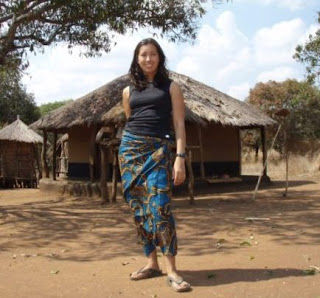
Wednesday, 7 May 2008

A glimpse into my every day life

It seems a little late to have a post on this, given that I've been here for over 9 months already.. . . I started writing this blog entry way back in November. I kept putting off posting it because I wanted to take some corresponding photos, but I just never got around to taking them. I have yet to take all the photos I would like to include; However, I have received a couple of recent requests for a post such as this, so . . . here we go . . .

The details of my day to day life here are different from what I’m used to in Canada, but not to the degree most people probably think. At the end of the day, I’m doing the same kind of stuff – it’s just the details that are different.

The hours I keep here are quite different. While back in Canada – especially during my undergrad – I wouldn’t make my way to bed until 1 or 2am, here I try to get to bed by around 10:30pm – even then, that’s pretty late by Malawian standards. My roommates are often in bed by 9:30, and in the previous place I stayed my roommate was generally in bed by 8pm. Still, 10:30 is early for me, but necessary, since my day starts at 5:30am.

While I’ve historically been very reliant on my snooze button, here I generally wake up unassisted sometime between 5:15 and 5:30 every morning (when I “sleep in” until 7 on the weekends, my housemates make fun of me for sleeping in so late!). I crawl out from under my mosquito net on my foam mat on the basic wooden frame bed I had made by a nearby carpenter.

One of my preferred breakfasts is phala – a porridge made of roasted maize and soya flour – with bananas. My roommates either don’t have breakfast or eat chips (fries) or rice porridge.

I leave for work around 6:45am. A short walk down my street brings me to the nearest minibus route. I generally have to wait no more than a few minutes before I see a white minibus come peeling around the corner with a man hanging out the window shouting “town! town!” indicating the vehicle’s final destination (the bus station in “old town”).
Photo 1: View down my street
Photo 2: A little shop across from my house

On certain days, I just don’t seem to have luck catching a bus from my usual spot. So, I have to walk through my area’s trading centre area to the main road. I take a shortcut which has me tromping through maize and cross an open storm sewer which serves as a bit of a garbage dump. Solid waste management leaves something to be desired here . . . storm sewers often become mini dumps which are burned occasionally as trash accumulates. This particular spot is close to a few tailors and a couple “saloons” (salons) so it is inevitably filled with many colourful scraps of fabric and LOTS of spent hair extensions (as a general rule: if a lady has a lovely head of long hair, it isn’t hers).

I pass a couple of carpenters, who work in open air shops using old hand tools. I bought my bed from such a carpenter.
Photo 3: My carpenter

Up a little further I pass a maize mill where ladies from all around gather to earn a little money by offering sifting services outside the mill.
Photo 4: Ladies at the maize mill. Those woven baskets there are used to sift maize.

Entering the market, I’m always greeted with a jovial “Muli Bwanji!” (how are you?) by a man running a little fruit stand. No matter how many times I respond with the appropriate “Ndili bwino, kaya inu?” (I’m fine, and you?), he always seems to be entertained, and has a good laugh at my expense.

Photo 5: Fruit seller

Vendors sell bags of charcoal. Charcoal is produced by slowly burning huge piles of wood in soil packed ovens. Charcoal is a very commonly used fuel for cooking in town, and is a significant contributor to the deforestation problem.
While production of charcoal is technically illegal in Malawi, it is still very common being one of the non farming related income generating activities available to the rural poor.
Photo 6: Charcoal seller

A row of ladies sell used clothing just outside of the market walls. The used clothing is shipped over from North America and Europe in shrink wrapped bails. I see all kinds of familiar shirts walking around town, from little kids in Montreal Canadians Jerseys, to big guys in purple “red hat society” shirts, or ladies in “world’s greatest dad” t-shirts. The used clothing market is largely attributed to killing any chance of sustaining textile industries in Malawi and other African countries.

Across from the used clothing ladies, chip sellers line the path.
Photo 7: Chip seller

Continuing on, I pass men laying fish out to dry in the sun, and ladies running little phone booth stations. There are tyre fitters and car mechanics who set up simple shops as well.
Photo 8: Tyre fitter
Photo 9: Car mechanic

Within a 20 m radius, one gets to experience almost the entire meat production process. It is pretty interesting, really. First, there is the heard of goats that is always gathered next to the filling station. They seem to be shipped in every morning by pick up truck; they have their legs tied together and are lain down on the bed of the truck for transport. A short distance away is a tree that I pass on my way to the bus stop. Each morning I walk by they seem to be a different stage in the slaughtering process: sharpening their knives as a goat nervously stands nearby; tying a goat upside by his/her ankles; slitting the throat; draining blood; skinning . . . etc. Sometimes one goat, sometimes two. A short distance away from the tree is the butchering table – a small table, completely in the open (and generally completely covered in flies…) There is always a goat carcass or two strung up, and one being chopped up into bits using what appears to be quite a dull knife. Across from this table are the men with the chip stands. While most are cooking up chips in pools of oil on metal tables, a couple sell fried goat meat and goat “offals” – mmmm.
Photo 10: Goats awaiting their turn
Photo 11: Goat slaughtering tree
Photo 12: Goat slaughtering tree in all its glory
Photo 13: Butcher

Now, continuing along my walk . . . passed the goat slaughtering tree, is another tree of note. On the weekends, the second large tree I pass serves as a barber shop. A man puts up a little cardboard sign saying “barbershop” and pulls up a chair. He seems to have quite the steady stream of clientele, there is always a row of people sitting on stumps by the tree, seeming to be waiting their turn. Across the street, I arrive at the bus stop.
Photo 14: The barber (no clients around at the time!)

I flag the bus down and squeeze myself in. It wasn’t so long ago that it was a much tighter fit. A recent law was passed restricting the number of people allowed per row to 3. Previously, 4 people were squished into rows really meant for 3 – not too comfortable. However, fewer people per ride means higher prices.

A minibus trip to most parts of the city costs 90MK (65 cents). That doesn’t sound like much, but when you compare it to average wages people make in this city, it is huge! Let’s say you need to take a minibus 2 times a day, 6 days a week, 4 weeks a month – that comes to 4320MK per month. Compare that to some typical wages . . . My watchman is paid 2500MK per month, office clerks at my housemate’s work (the Ministry of Foreign Affairs) make 8000MK per month. Transportation in this city has become cost prohibitive for many.

By minibus it takes approximately 15 minutes to get into town from this point. It isn’t a terribly thrilling ride . . . We pass a couple of nicely landscaped traffic circle – traffic circles here are amongst the most nicely landscaped places in town. On Saturdays you often see wedding parties using traffic circles for photo ops! Traffic circles are the norm with traffic signals only found at a couple of T-intersections. Traffic signals are called “robots” here. I recall being a little confused overhearing a conversation on the new robots being installed in town when I first arrived…
Photo 15: War memorial. I went to check it out in December, a month after it was officially opened. Even then, plaques were already falling off . . .
Photo 16: Pedestrian bridge over the major road which brings me by minibus (the stop for which is just past the bridge) to work. No one really uses the bridge – the only time I see it being used is by people jogging up and down for exercise.

I crawl out of the minibus (it takes some technique) at my stop which is near the Shoprite and main People’s trading centre (PTC) Old Town. Shoprite is a big South African grocery store chain, while PTCs are a Malawian chain.

My office is a short walk away, and I generally arrive by around 7:15am. I’ve been spending much time in the office recently. I’ve actually moved on to working on a different project now, one which I’ll be writing about soon.

I often get a little peckish around mid morning, and dash out of the office for a quick snack. What I pick up for a snack is often quite seasonal. At present, my current favorite things are: boiled ground nuts (peanuts), which I purchase from ladies that carry basins of them on their head; guavas or green tangerines, which I purchase from men who walk around town with boxes of them for sale; and roasted sweet potatoes, which I purchase from men who roast them on charcoal stoves in the markets.

My lunch hours are busy times, filled with errands. There isn’t much time available in the week to do shopping and the like – stores open and close within normal working hours during the week (typically open between 8 and 5), close around 1pm on Saturdays, and most stay closed all day Sunday. It is pretty frustrating; I don’t know how people get anything done! I’m lucky though; my office is located centrally in the heart of Old Town which is pretty handy. I know my area like the back of my hand, and I have my preferred shops to get pretty much everything I need.

I usually bring leftovers for lunch (the day we got a microwave at my office was very exciting for me), but a day or two a week I’ll go out for lunch. One of my most commonly visited spots is a restaurant in the market called “the Silver Spoon.” I will usually get nsima with vegetables and beans – approximately $0.80 (the price went up recently!).
Photo 17: The Silver Spoon

It gets dark pretty early now, so if I want to get home before dark (which I do!) I need to leave the office by 5:30.

By the time I arrive at home, my watchman is sitting at his post. Most everyone in this town seems to have a watchman. They are key in reducing opportunistic criminals – our watchman has scared off would-be robbers who have lurked by my window on a couple of occasions.

At home I’ll hang out with my roommates for a bit. We usually make supper together – some combination of rice or nsima with veggies and eggs, meat (or tasty soya pieces for me!), fish, or beans. I’m generally in charge of preparing the veggies – my housemates used to squawk about my not using enough oil in my cooking, but they’ve gotten use to it!

I usually bathe during the evening, even though my housemates seem to think this is weird (they always bathe in the mornings). We lack a geezer (a hot water heater) so I put on a big pot of water to boil – I’m not a fan of cold baths! I fill up my trusty red bucket with the warmed water and head to the bathroom where I use a plastic saucepan, a loofah (which grow locally here), and a bar of soap to get squeaky clean before starting my day. I dry off using a piece of chitenje fabric which I wrap around me before returning to my room.

And then . . . off to bed!

Friday, 25 April 2008

Kim's Parents in Malawi!

My parents recently descended upon Malawi. While I don’t think either of them could have imagined that they’d ever visit the African continent, my being here served as enough of an incentive to draw them over!

For their first evening here, my house mates and I had my parents over for supper. We whipped up some Malawian delights – pumpkin leaves with ground nut flour and chicken with nsima. My parents got to try their hand at eating nsima; it requires some technique – my dad was a natural, my mum . . . well, she needed some further instruction (sorry mum!)
Photo 1 – Khala and I whipping up dinner

Photo 2 – Mum and Dad’s first nsima

I rented a car for their visit. I feared being quite the hazard on the road, having not driven in 8 months and needing to drive on the left hand side of the road. Not to mention the fact that driving here poses some interesting challenges, including some potholes that seem large enough to swallow the teeny Toyota Starlet I had rented.

Wanting them to dive right into things, on their first full day in Malawi we headed off to spend a little time in a village. We visited the village I stayed in when I first arrived in Malawi. When I had traveled to the village before, I used a motorbike or Land Cruiser; as such, we were able to drive right up to the village. With our little car, however, we had to do the last bit of the journey on foot. We were told that it was a 2 km walk, but from what I remembered, that didn’t seem possible . . . in fact, it was at least an 8 km walk, and took quite some time. My dad learned the wonders of using one’s head to carry things, he’s a fan!
Photo 3 – Dad showing off: no hands!

The village stay was quite fantastic. Too short, but my parents did get a good taste of Malawian village life. The whole family seemed very happy to see me again, and they were thrilled that I brought my parents.
Photo 4 – Mr. Chisamba showing my parents his groundnut (peanut) field

We stayed in a newly constructed mud hut. I had prepared my parents in advance for the fact that they would have to sleep on a reed mat. I assured them that it wasn't too bad - after the 2 weeks I spent sleeping on one the last time I was in the village, I was almost convinced that I didn't need a mattress at all (though I did end up picking one up when I returned to the city). However, while I had the same bed frame + reed mat combination I slept on last time, my parents were totally spoiled – they had a full bed, mattress and all!
Photo 5 – our hut

We spent our time in there sitting and chatting with people, helping (well . . . we tried to help anyway) with or at least observing various tasks, visiting, etc. My parents learned how to do tasks such as preparing pumpkin leaves for dinner, cooking nsima, pounding maize, taking dried kernels off of corn cobs, etc. There was plenty to fill our time.
Photo 6 – Dekernelling maize

Another major activity was eating . . . In the morning of the day we left, Mr. Chisamba, the head of the family, asked when we’d be needing to leave, and when we’d like lunch. I told him that we had to be off by around 1pm, so, lunch any time before that would be fine. We had had breakfast sometime around 7:30 – 8 in the morning, consisting of big “scones” (buns), biscuits, and tea. Around 10:00 a tray of food was brought to our hut; low and behold, it contained a full meal, consisting of rice, and relishes of tasty soya pieces and vegetables. It was a little early to have such a big meal! After eating what we thought was lunch, we packed up our things. My dad was standing by the doorway when I heard him exclaim: “oh no!” I thought something bad might have happened, so I rushed over to see what was wrong – there I saw Ellis striding over with another tray of food. So, at 11:15, we had our second lunch of the day! This time, nsima, tasty soya pieces, vegetables, and chicken. My parents were still stuffed from the previous meal, and didn’t think they could eat another bite. However, I informed them that it wasn’t really an option - by rules of Malawian etiquette they at least had to have a few bites! This really is just one example of incredible Malawian hospitality – this is not a terribly well off family, but they were so kind and generous with what food they had.

No one in the family asked anything of us; I have heard stories of volunteers returning to rural host families, and finding themselves bombarded with requests for money, cell phones, etc. I came with a bag of staple food items as a thank you for putting us up. We gave them a small gift of cash when we left – the least we could do considering how generous they were with food and everything – but I don’t think it was even expected.

After leaving the village, we were headed to Cape Maclear. We were told that the drive would take us around 2.5 hours. It went well enough for the first hour or so. I drove, and managed to avoid hitting any of the pedestrians, bicyclists, goats, etc that serve as obstacles on the roadways here. Then, we turned onto the M10 highway – which, according to the map anyway, is supposed to be a major highway – for the next 70 km towards Cape Maclear. However, as soon as we turned onto it, the lovely paved roads I had been enjoying abruptly ended, and I found myself crawling at 10 km/hr on a horrible dirt road. I’m still not entirely convinced we were even on the correct road, but I don’t know what else it could have been! The drive from this point took another 4 hours. It was BRUTAL. I was driving the smallest car I’ve ever driven on the worst roads I’ve ever driven on! There were definitely points along the journey I just didn’t think we were going to make it.

The following morning we headed to Mumbo Island, which is an island privately owned by a safari company, a couple kilometers offshore from Cape Maclear. It’s beautiful, bilharzia (a nasty parasite that inhabits the waters along much of the shoreline of the lake) free waters and beach tout (annoying guys that pester tourists relentlessly to buy stupid crafts or use their tour services) free beaches sounded like an excellent part of the lake to bring my parents. We stayed in swank safari tents. It was a lovely little island escape, offering great snorkeling and kayaking, nice walks, and good food.
Photo 7 – Safari tents on Mumbo Island
Photo 8 – My parents and I
Photo 9 – Nice view
Photo 10 –A smaller island just off the beach, where 5 of the 7 tents were located

Our next stop was Liwonde National Park. We participated on walking, and sunset drive safaris. We saw lots of various antelope type creatures, warthogs, birds, and hippos, but sadly the elephants eluded us.
Photo 11 – Hippos!
Photo 12 – View of the river
Photo 13 – Warthogs
Photo 14 – Ungulates galore!

From Liwonde we traveled just a short distance to Zomba. We had meant just to pop up for a cup of tea at a nice hotel on the plateau, but as we were leaving I spied a poster for a nearby stable which offered trail rides on the plateau. We called them up and arranged for an afternoon ride, and checked into the hotel.
Photo 15 - The lovely gardens of the Ku Chawe Hotel

The ride was quite lovely! The stables had been open for a year, but they had only recently started advertising, which is probably why I hadn’t heard about it before. They had 5 beautiful horses; the stable owner said that all but one came from Zimbabwe, rescued after being abandoned when the white farmers were forced out. We went on a ride lasting a couple of hours, through old stands of pine trees and some indigenous forests, passing a few illegal logging camps along the way.
Photo 16 – We had to cross a dam at the beginning of the ride
Photo 17 – It was nice to be back on a horse again!
Photo 18 – After the ride, we were invited back to the stable owner’s home. She had a ridiculous view from her garden.

We then headed to Mulange Mountain, the highest peak in Central Africa. It is a nice spot, a picturesque mountain, especially with the tea plantations at its base.
Photo 19 – Buying dinner supplies in Mulange town. Here I’m buying oil – you can buy oil in little baggies, quite handy for our purposes!
Photo 20 – Mulange mountain with tea plantations in the foreground

I went for a hike to a waterfall – it’s too bad I didn’t have time to hike up to the highest peak, a trek which takes a couple of days by most. After the hike, I went for a dip in the Likhubula pools, a great swimming spot in a mountain stream. We stayed at a nice little chalet, and used the surprisingly well equipped kitchen to prepare a tasty dinner.
Photo 21 – Waterfall on Mulange
Photo 22 – Lukhubula pools

The following day we drove through the tea plantations of Thyolo on our way to Blantyre. Tea is the second most important export crop in Malawi. It is grown mainly in the southern region, particularly in the areas around Thyolo. The tea plantations result in a landscape quite unlike that elsewhere in the country – the tea growing in low shrubs, harvested by workers wearing large baskets on their backs.
Photo 23 – Tea fields in Tyolo, with tea pickers hard at work.

In Blantyre we did some fabric shopping and went out for a very nice dinner. The next day we returned to Lilongwe, stopping in Dedza for pottery and cheesecake along the way.
Photo 24 – St. Michaels and all Angels Church
Photo 25 – My mum picking up some tailoring in Blantyre
Photo 26 – By far, the yummiest dessert I’ve had while in Malawi! Mmmm . . . meringue + macadamia nuts + vanilla ice cream + chocolate and caramel sauce = heaven.
Photo 27 – Emerging from the chaos, as I picked up some produce, somewhere between Blantyre and Lilongwe
Photo 28 – I love the strange combinations you find for businesses here

The following day we went to the Mua Mission and cultural centre, where we learned a lot about the culture and history of Malawi, and purchased some carvings for which the centre is famous.

Photo 29 – Kugoni Cultural Centre

I then sent my parents off on a safari in Zambia, to South Luangwa National Park for 4 days. They did pretty well – they saw the usual elephants, giraffe, zebras, impalas, hippos, crocodiles, etc. As a bonus, they saw some other quite cool things – 2 leopards (beautiful yet elusive creatures!), honey badgers (apparently very rare…), and a python!

We had a couple days of running around Lilongwe before my parents were shipped off to Canada. I'm so glad that they had the chance to come and check out this lovely little country of Malawi, as it is a place that will hold a very special place in my heart long after I leave.

Wednesday, 26 March 2008

Easter Weekend on Chizumulu and Likoma Islands

I just got back from a lovely Easter long weekend.

Here in Malawi both Good Friday and Easter Monday are national holidays, so I wanted to make the best of my extra long weekend. I decided to go to a couple of Lake Malawi’s islands: Likoma Island and Chizumulu Island. I managed to convince my friend Heather to join me on the trip.

Likoma is a small island, 8km long by 3 km wide. It is located in Mozambican waters, but is territorially part of Malawi. It is of historical note in Malawi because of the Scottish missionaries that set up shop there. Aside from that, the main draw for travelers is the island’s isolation and mellow vibes. Chizumulu is smaller than Likoma and even more remote. It has some lovely beaches lined with ancient baobab trees, and great snorkeling along the shores.

For budget minded travelers, it is a bit of a trek to get to the islands. The only “budget” option to reach the islands is by taking the lake ferry, the MV Ilala. The MV Ilala has run up and down the lake once a week since 1957. It is notoriously slow and often late. However, I’ve heard wonderful things about the trip itself, and been told it is something not to be missed, so it is something I had to make sure I got around to doing before leaving!

On Friday morning, Heather and I headed off to catch the ferry! A couple hours by minibus brought us to the town of Salima, from which we grabbed a matola (an unofficial shared taxi, in this case, a small lorry) to the town of Chipoka. We weren't sure how long we were going to have to wait (we arrived pretty early because not only is the ferry often late, it is also sometimes early!). Soon enough, the ferry came into view.
Photo 1: The Ilala

The ferry pulled out of the dock at around 4pm. Our first evening on the boat was quite pleasant – we made some new friends and sipped beer on the deck, and enjoyed a lovely sunset. After a quite delicious dinner in the “saloon” we tucked ourselves into bed for an early night.
Photo 2: Me hanging on the deck

Photo 3: Heather and a fellow traveller Jesse, enjoying a beer
Photo 4: The sunset

The level of comfort with which one travels on the Ilala varies greatly depending on the type of ticket you spring for. Second class is on the lowest level of the ship, and is cramped and chaotic. People and cargo are piled on top of one another, and theft is apparently a significant issue. Not so pleasant . . . weighing cost vs. comfort, we opted for first class deck tickets.

The first class deck wasn’t very busy; we were two of 6 people camping out that night. Heather and I managed to rent the last available mattress. It was a little cozy! Sleeping out on the deck was less unpleasant than I thought – I managed to sleep despite the constant grumble of the engine and the mighty breeze that blew across the lake. Poor Heather opted not to bring her sleeping bag, so she woke up every so often to add layer upon layer, as it was quite chilly that night.
Photo 5: nighttime on the ferry deck

The next morning, the ferry slowly (it is not the swiftest of boats) tugged along the Mozambican coast. It is beautiful, and much less developed than the Malawian side. We stopped at a couple of ports along the way.
Photo 6: Baobab on the shore

Photo 7: Despite how patriotic this photo looks with the Malawian flag blowing in the wind, the land behind me is actually Mozambique

Photo 8: Metangula, Mozambique

Many of the ports the ferry stops at are too shallow to dock at. In these cases, the ship’s lifeboats are used to ferry people back and forth between the ship and the shore. It is a slow process . . .
Photo 9: Lifeboat
Photo 10: Filling the boat with people and goods
Photo 11: Picking up and dropping people off at the shore

It was a long day of ferrying. It takes a lot out of you!
Photo 12 : Napping

It wasn’t until we were already most of the way to Likoma that Heather and I decided to make a slight change in plans, and head to Chizumulu Island (we were originally just going to Likoma). It is a stop further along on the ferry route; we didn’t arrive until around 9:30pm on Saturday evening.

As we boarded a lifeboat to be brought to shore, the thought suddenly occurred to me: how exactly are we going to get out of this thing without getting completely soaked? Just as I pondered this, the dude driving our boat informed Heather and me that we were going to have to jump. As we neared the shore he started shouting “jump in! you must jump in now!” The crowd which had gathered on the shore to board the boat soon swarmed around and people frantically began loading in. I hopped off and found myself waist deep in water. Heather and I, both sopping wet, glanced at each other and started laughing hysterically about our soggy conclusion to 30 hours of ferry travel.

Dripping, we dragged our weary selves 100m from where we were dropped off to Wakenda retreat, a backpacker resort which, save for a couple local rest houses, is the only available accommodation on the island. We were greeted by the lodge’s proprietor – an Englishman named Simon. He was surprised to see us; it is uncommon for the lodge to receive guests coming from Northbound ferries (more commonly they receive guests on the southbound journey, as the island is only a few hours away from some larger Malawian towns in the north).

We were the only guests at Wakenda. It is an isolated place, depending almost exclusively on the Ilala for the transportation of guests. Some also come on a local transport boat that runs between Likoma and Chizumulu almost daily. Wakenda also relies on the Ilala to bring in all supplies – food, building material, etc. The manager hops on the ferry on Saturday evening on its trip north, and returns late on Monday on the southbound journey. Since we arrived at the end of the last food run, we were warned that supplies were running low.

Our time on Chizumulu was wonderfully relaxing. We swam and snorkeled in the crystal blue waters surrounding the resort, went for some nice walks around the island, watched local football games, sampled some local wine (brewed from water, tea leaves, sugar, and yeast), and read magazines (a rare treat for us!) while basking in the sun or lounging in hammocks.
Photo 13: Some fish I saw while snorkeling in the waters just in front of the lodge (making use of my waterproof camera!)
Photo 14: More fish
Photo 15: Our grass hut (with Dopey, one of the very cute resident dogs of Wakenda)
Photo 16: There was no cell reception right at the lodge, so we had to walk a little distance away to a hill for signal. We were followed by this group of kids, who started to sing and dance (with dance moves simulating a cell phone conversation!) for us – quite cute!

Photo 17: A view of one side of the island from a hike
Photo 18: The Wakenda retreat shoreline at dusk

As nice as our time was there, we intended to spend just one day on Chizumulu before heading to Likoma. We were told that the local transport boat between the two islands would not leave before 10am, but may not leave until as late as 1pm. However, when we arrived at the beach at 9:20am on Monday, we saw the boat sailing off into the horizon. So much for never leaving before 10am…
Photo 19: Our boat, sailing away without us

Oh well, there are worse places to get stranded . . .
Photo 20: Got some good hammock time in!
Photo 21: Yet another lovely Malawian sunset

We had to make it back to Likoma for Tuesday morning, to make it back in time for our flight – we had managed to score stand-by tickets for a chartered flight to Lilongwe (the ferry was great and all, but we didn't need to repeat the experience only a couple days later!). We were unable to take our resort’s boat because it was out of petrol (and wouldn’t be getting more until the return of the ferry!), so, the only other option was to hop on the ferry as it made the return trip to the south. The ferry wasn’t due back to Chizumulu until 12am. Once the power cut for the night at around 10pm (the island is powered by a big generator, and only has power available for 14 hours of the day) Heather and I headed for a couple of lounge chairs on the beach. We napped until woken up by the sound of the boat’s horn, as it pulled up into the bay.

Back on the ferry, we staked out suitable sleeping spots and hunkered down for a couple of hours. The ferry sat in the bay until 3am, and arrived in Likoma at around 4:30. Needless to say, we didn’t have the most restful night’s sleep.
Photo 22: Being ferried to the shore as the sun rose

It was nearly 5:30 by the time we got off on shore. So, we had some time available to run around the island before catching our flight. Our first stop was the lovely St. Peter’s Cathedral, built by missionaries and completed in 1905. It is huge, similar in size to Westminster Cathedral, and quite lovely!
Photo 23: St. Peter's Cathedral

The rest of our time on Likoma was spent exploring the market, wandering around aimlessly, and hanging out by the beach. We met some lovely people, and had a nice time.

All in all, quite a well spent long weekend I'd say!