Thursday, 11 October 2007

Lake of Stars Music Festival and Mother's Day

Lake of Stars Music Festival
While all my friends and family back in Canada were gathering together last weekend to eat turkey and pumpkin pies in celebration of Thanksgiving, I was at the Lake of Stars Music Festival.

The Lake of Stars Music Festival is an annual event (this was its 4th year) held at a lodge on the lake, approximately 4 hours north of Lilongwe.

I headed to the festival with Monica, the other EWB volunteer based out of Lilongwe, and two of her friends. We left on Friday afternoon, and arrived at sunset.

Initially we stayed at a nearby cottage, camping out in the yard. Getting to the festival required either a 45 minute walk along the beach, which could only be done during daylight hours because of a dangerous combination of rocks, hippos and crocodiles (when Monica and I did the walk during the day the only creatures we encountered was a herd of cattle being directed down the beach), or a short drive. The people we were with showed surprisingly low interest in spending much time at the festival, so Monica and I decided to jump ship and camp at the festival grounds instead. It was definitely the right decision!
Photo 1: Cows being herded along the beach

Photo 2: Festival main stage
Photo 3: Harry’s beach bar

The festival was a fun time. It was, however, a bit different than I anticipated. I felt like I was at a festival back in Canada – the set up, the acts, the food, the crowd – it all reeked of a European or North American festival. From what I gathered there, it seems that the entire planning committee was British. The level of Malawian musical content was also lower than I expected, which was disappointing. There were a few acts from Malawi, and a few from Southern Africa, but aside from them, the rest were flown in from the UK or the US. The demographics of the crowd seemed to suggest that every 20-something Muzungu (Westener) in all of Southern Africa was in attendance. There were a fair number of Malawians, but they were the minority. It is very unfortunate that the festival was so inaccessible to the average Malawian. The ticket cost alone was more than I pay for rent in a month.

Photo 4: Malawian fisherman in the foreground, with the tents of festival goers in the background.

Despite the guilt I felt about being an extravagant muzungu going away for the weekend to an expensive music festival, I had a good time! When not watching shows (there were some pretty fantastic acts there!), I spent much time lazing on the beach (a stone’s throw away from the 2 stages), chatting with people (Monica is a social butterfly and seemed to know pretty much everyone!), and eating the surprisingly good food. All in all, it was a very nice and welcomed break from my usual routine.

Photo 5: Lounging on the beach with a couple fellow Canadians and a Brit

Photo 6: Monica and myself
Mother's Day
I arrived back in Lilongwe on Monday, which was a National Holiday - Mother's Day.

Mother’s day at my household, however, had a bit of a sombre mood.

My host mother suffered a stroke early last week. At first, I didn’t even know that it happened. She spends most of her time in her room, so not seeing her up and about didn't seem unusual to me. I did, however, notice a distinct change in the moods of the sisters. It wasn’t until 2 days after it happened that my roommate told me.

She stayed at home to convalesce for a few days, but due to dangerously high blood pressure levels, she was hospitalized from Thursday until last night (Wednesday). My roommate, Gee, camped out at the hospital with her.

So, my house mum spent Mother’s day in a hospital bed. Her daughters prepared a big dinner at home and brought it to her to celebrate Mother’s day together as a family.

Everyone is back home now, and my host mum is recovering. She is paralysed on one side, and is going to be starting physiotherapy soon. I haven't seen much of her as she has been keeping to her room and I don't want to intrude. I feel like a bit of an extra burden at the moment, and am just trying to stay out of the way.

Wednesday, 3 October 2007

A weekend at the lake

Lake Malawi is kind of a big deal around here.

People are always asking me if I’ve made it up to the lake yet and raving about how nice a place it is to go for weekend getaways. So, I was thrilled when I was invited up to a cottage on the lake at Senga Bay (an hour and a half away from Lilongwe) last weekend.

Lake Malawi is the 3rd largest lake in Africa. The Lake dominates the geography of the country, following the contours of the Great Rift Valley for a distance of 585 km, reaching a width of 100 km at points. In all, it covers over 15% of the total land area Malawi.

Source: http://www.aquaria.info/graphics/misc/malawi.jpg

The shores are lined by sheer mountain cliffs and seemingly endless sandy beaches and the lake itself contains more freshwater fish species than are found in all of North America and Europe combined. Most of the fish are endemic to the lake.

Many of the cichlid species found in the lake are very popular in the aquarium trade. I hope to go scuba diving to check them out at some point while I’m here!

Source: http://www.vagabonding.com/photos/malawi/DSC01998_lake_malawi_fish.jpg

The majority of the animal protein in the Malawian diet comes from fish, and traditionally, Lake Malawi has supplied it by the boat load. However, wild populations have become increasingly threatened by over fishing and pollution. There was a lot of fishing going on near where I was staying, and I heard a few stories which reflected just how much smaller the catches have been in recent years.

Many of the photos I took at the lake came from a walk I took on Saturday afternoon. We passed bathing men in their briefs getting very sudsy (no photos of them though!), women laying out their freshly washed clothes and linens out to dry on the sand, and many men fixing their fishing boats (which ranged from dugout canoes to 25+ ft long wooden motor boats) and tending to their fishing nets.

Photo 1: View down the beach


Photo 2: Fabric left out to dry

Photo 3: Fishing boats

Photo 4: Fishing Nets

Photo 5: Solitary fishing boat

The cottage was a nice and relaxing time. In addition to hanging out on the beach, I spent much time monkey watching (lots of monkey mums with their babies!), climbed a hilltop for a gorgeous view of the surrounding bays, and watched as some car repairs happened on the car we broke as we drove in . . .

Photo 6: Fixing the car

Photo 7: Monkey mum and baby

Photo 8: View from the hillside.

It was really good to get out of the city for a little while. This upcoming weekend I will be making my return to the lake, but I'll be going to a place a few hours further north. I will be attending the Lake of Stars music festival, which features a wide array of Malawian and international acts. I haven't quite worked out how I'll get there, but I shall find a way . . . I hope!

Kim

Sunday, 23 September 2007

My new home in Lilongwe

I have moved into my new home in Lilongwe, and have been here for nearly 2 weeks now.

I’m living with a family consisting of a mother, 4 of her daughters (she has 9 daughters in total), and 2 of her grand daughters. The daughters range in age from 18 to late 20s. The 2 grand daughters are both 7 years old.

While the original agreement was for me to have a room to myself, long story short, I now find myself sharing a room with a woman my age named Gee. While I wasn’t thrilled by the sudden change in plans, I haven’t minded sharing a room so far, and otherwise I really like the place, so I’ve decided I’m willing to live with this situation for the time being!

My new place is located in a part of town called “Falls Housing Estate” though I’m not entirely sure how it got the name as there are no falls of any sort in the area. I’m a 25 minute walk from work (which is about as good as I could have hoped) and am nicely situated near the bus station, a market, and many shops.

Photo 1: The house
The house consists of a sitting room, kitchen, shower area, toilet, and 4 bedrooms, all accessed down one long hallway.

Photo 2: The street
I live on a very bumpy dirt road!

Photo 3: The sitting room
Many an evening is spent chatting away in the sitting room, listening to Christian radio stations on the stereo. Though, much like back home, the kitchen is where people tend to gather to socialize!


Photos 4 &5: The kitchen
Most of the cooking takes place on a charcoal stove, or a fire outside, though that has changed a bit with my recent purchase of a hot plate. We regularly have a little 2 year old boy over to visit, and I get extremely nervous having him in the kitchen with all those hot surfaces and pots of food cooking away right down at his level!

Photo 6: The shower room
While there is a working shower, there is no hot water. My preferred method of bathing is the good ol’ bucket shower, with water warmed using a charcoal stove.

We have running water most of the time, but it shuts off every morning between 5:30 – 9am. The morning, before work, is the time when the dish washing, floor mopping, bathing, and clothes washing tends to take place, so this is rather inconvenient timing! We fill buckets of water every evening in preparation for this.

Photo 7: My room
My room is low on the frills, but comfy!

Photo 8: Out behind the house is an area that is essentially our garbage dump . . . The way that garbage is dealt with here is very different from the municipal waste, recycling, and compost collection I’m accustomed to back home! Not much waste ends up getting produced, but all the kitchen scraps, cardboard packaging, etc, is tossed in an area back there. The chickens from the neighbourhood come by to peck at what they can, and the rest gets burned on occasion.

Sunday, 16 September 2007

Village Stay

I have arrived back in Lilongwe after my 12 day long Village stay. The purpose of my time in the village was to gain a better understanding of rural Malawian life. Small scale farmers are the main beneficiaries of TLC’s projects, so an understanding of the realities they face is important for me!

The village was located about an hour east of Lilongwe. It was 11km away from the nearest town and paved road. 34 people lived in the community I stayed in – 2 of whom speak some English.

For the first few days of my stay, Sabo, my father for the stay, was in Northern Malawi. As a result, the other English speaker, a woman named Ellis, became my go-to person.


Photo 1: Ellis and I

My Village


Photo 2: The village. On either side of a dirt path were mud huts and beyond those were a variety of storage structures (for maize and groundnuts mostly) and animal enclosures (chicken and pigeon coops, rabbit hutch, pig and goat pens), bathing stalls (with reed privacy shades and stone floors), and a latrine.


Photo 3: The village was located in a hilly area. Malawi has a densely populated rural area (as far as rural areas go anyway!) and this was evident where I was located as the countryside was dotted with many communities.


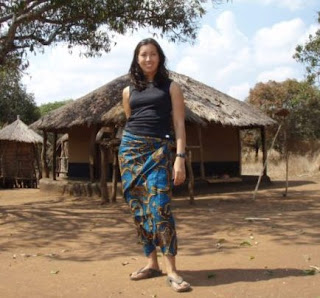
Photo 4: I stayed in Ellis’ hut. It is a simple mud hut with a thatched roof, divided into 2 rooms – a bedroom, and a sitting area. I stayed in the bedroom, sleeping on a reed mat placed on a metal bed frame – it was surprisingly not uncomfortable!


Photo 5: All of our cooking took place over open fire in the outdoor kitchen area. Most took place in the mud walled wind screen area. In this photo, I’m busily stirring sweet beer – a non alcoholic drink made from maize, served by the vat at weddings.


The Irrigation Site

The village I stayed in was located at one of the sites TLC works in, a large stream diversion irrigation site.


Photo 6: The “garden” is a site that receives stream diversion irrigation (as described in my previous post – it is the same site in fact). The area is divided into 15m x 72m plots, rented out by various farmers. The types of crops grown there include paprika (peppers), maize, sweet potatoes, pumpkins, radish, Irish potatoes, cabbage, and a variety of other crops. Some, such as paprika, are sold, while others are consumed by the villages.


Photo 7: Sabo and I by the gardens.

Day to Day Life


Photo 8: A Meal
Both lunch and dinner consists of nsima served with a relish. Nsima is the Malawian staple food, made out of maize flour. Relish consists of any number of dishes consisting of meat (goat, chicken, or pigeon mostly), beans, vegetables (which include many different kinds of greens – pumpkin, radish, and sweet potato leaves to name a few; Chinese lettuce; cabbage; etc), tasty soya pieces (which really are very tasty!), or fish. In this case, the relish is simply egg and tomato. You roll the nsima into a little ball in your hand, make an indentation with your thumb, and then use it to scoop up the relish to eat.


Photo 9: Cooking Relish
Most cooking takes place over a fire, using three stones to prop up the pot.


Photo 10: School
The kids went to school from 7:30 – 12. The school was a 2 km walk away along a dirt path. Elementary school runs from standard 1 – 9, and high school consists of form 1 – 4.


Photo 11: Collecting firewood
Fire wood provides an important source of fuel, used for almost all cooking. The firewood is collected in the surrounding areas by the women. They go out and chop down small trees, leaving them to dry for a month before returning to gather the wood. The branches are lashed together using the bark of a certain type of tree, and then carried back on one’s head.


Photo 12: Football field
Boys playing football in a field located nearby. The ball used was constructed by the boys out of plastic bags and string.


Photo 13: Pounding Maize
Pounding maize is hard work (I have the blisters to prove it!). The dried maize kernels are pounded using a mortar and pestle to remove the outer layer of the kernels, done prior to grinding into flour.


Photo 14: Sifting corn
After pounding the maize, it has to be sifted to separate the kernels out. The kernels were then brought to the nearest maize mill, which was located a few kilometres away at the nearby army base, to be ground into flour for use in making nsima and porridge.

A Village Wedding

During my stay I had the opportunity to attend a wedding at a nearby village.


Photo 15: Wedding – cooking nsima
Lots of food gets served at the wedding. A ridiculous quantity of nsima gets made, as well as relishes of different kinds of meat (no veggies available!).


Photo 16: Wedding – dancing
A common scene at a village wedding is a crowd gathered round a group of dancers. There are traditional men’s and women’s dances, both performed to the beat of a drum. Anyone may participate, and a large crowd develops to watch.

The bride and groom didn’t actually make their grand appearance until the end of the event. The festivities began at 1pm, and the bride and groom emerged at around 5:30 pm. They were fetched by a crowd of jubilant partygoers, but the couple themselves walked towards the rest of the guests with heads bowed, looking rather solemn. The groom wore a tuxedo, the bride wearing a white gown. They were led to a pair of chairs, which they were sat down on, with female relatives standing behind them. A few speeches were made, then presents and money were presented to the couple. My family left to return home before the end, so I’m not sure what happened at the end!
***

I'm now getting settled in to my new place in Lilongwe, and work is quite busy - but more on that next time!

Sunday, 26 August 2007

Kim's final week of training!

My partner organization, Total Landcare (TLC) works in Malawi, Tanzania, Zambia and Mozambique. Last week, field coordinators from the Tanzania office were invited to participate in a full week of training held at the head office in Lilongwe.

The training program was composed of a combination of in class presentations, field visits, and practical exercises, and served to introduce TLC’s programs, project objectives, and criteria for site selection, and increase the knowledge and skill of staff for better management of improved agricultural practices and management of the natural resource base. It was very helpful for me!

Malawi is a country which is highly dependent on agriculture. The majority of the population is involved in farming, but in recent years, crop yields have been declining. Sixty percent of smallholder farmers live under the poverty line. Soil fertility has been diminishing and losses of top soil are very high. Deforestation is a very serious problem, with 54% of forest cover being lost between 1972-1995. To address these problems, two of TLC’s main focus areas, and the focus of our training this past week, are best bet practices for small scale irrigation and sustainable agriculture through the use of agroforestry principles.

IRRIGATION
TLC promotes the use of 3 different irrigation practices: treadle pump, stream diversion, and drip irrigation. We focussed on the first two options due to cost restrictions associated the third.

Treadle pumps are used to draw water from a shallow well or river to a high point on the field where it is then directed by gravity through a series of channels to planting basins. The pump itself is operated by a single person, while a second one directs the water in the field.


Photo 1: Farmer using treadle pump


Photo 2: Flooding the field


Photo 3: A treadle pump irrigation field

Stream diversion involves diverting water from a stream by gravity using a hand dug canal to direct water to the fields. This technique can only be used in hilly areas, as it requires a change in elevation to convey the water.


Photo 4: stream diversion irrigation system


AGROFORESTRY

Nurseries are set up in villages to produce seedlings for use in a variety of agroforestry techniques. The nurseries provide the seedlings protection from pests and animals, rain and sun, and temperature extremes until they are ready for planting.


Photo 5: Tree nursery

Agroforestry involves the planting of trees within an agricultural setting; a variety of tree planting techniques are promoted, some focused on improving soil fertility, others focused on the production of wood and other products. TLC promotes both the planting of tree seedlings and the improved use and management of natural forests and trees. Tree planting occurs around the homestead, along property and field boundaries, and in woodlots/orchards. The improved management of natural trees promotes natural regeneration of trees, retention of natural trees on farmland, and the management of natural woodlands.


Photo 6: Planting of trees on field boundaries


Photo 7: Agroforestry practices result in women spending less time collecting firewood, giving them more time to complete other tasks


Photo 8: Alley cropping of trees within a field

During the field visits, I had my first experiences visiting rural Malawian villages. The people we met were very welcoming, and very proud of their work. We had the opportunity to speak to many of the farmers about their experiences, and they were happy to oblige.


Photo 9: A farmer (on the left) telling us about his farming practices while Glynwel (on the right), a project coordinator, translates.


Photo 10: A group of children and women who sang and danced while we visited


Photo 11: A pair of farmers and me


Photo 12: Group shot!


I’m going to be heading out to stay in a village for a little while starting on Monday. I will have limited internet access until I return to the city. When I return to Lilongwe I will find a place to live, and finally settle in to life here, something I am very much looking forward to.

Until then!